Outer Planet Synodic Cycles and the Scales of History
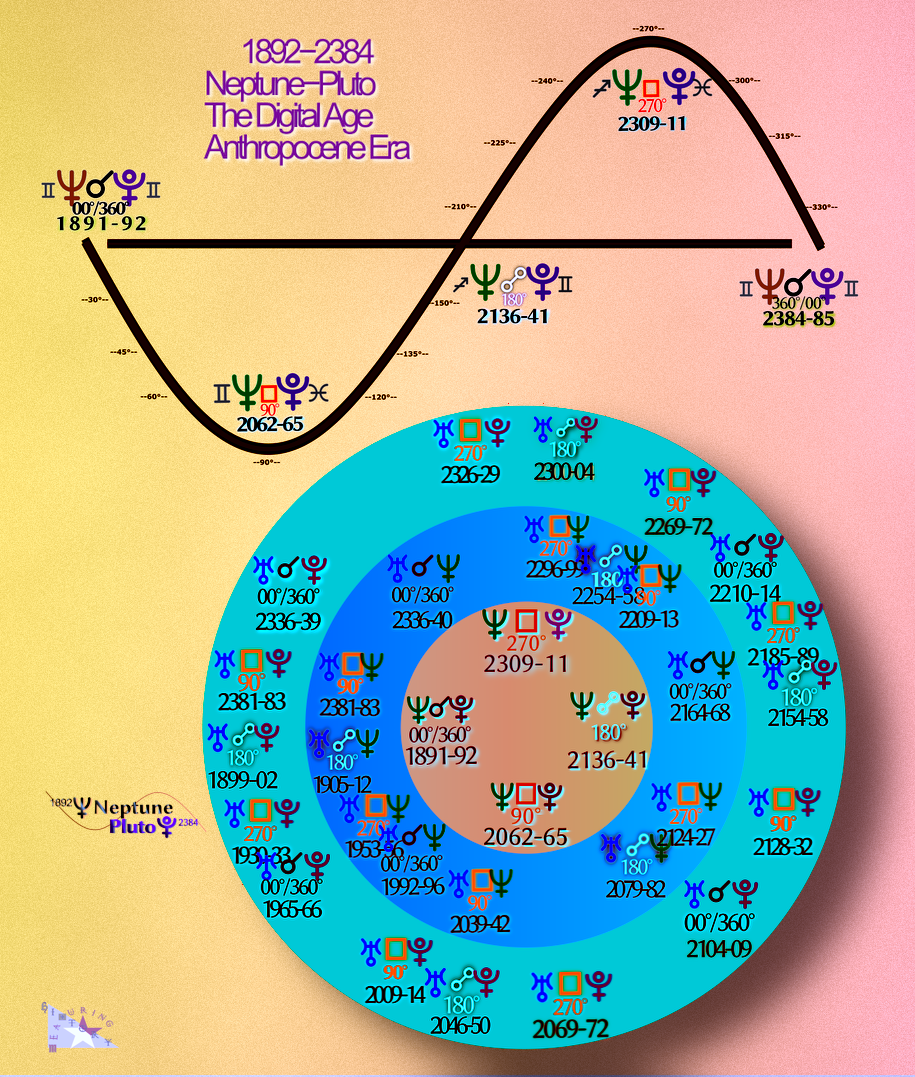
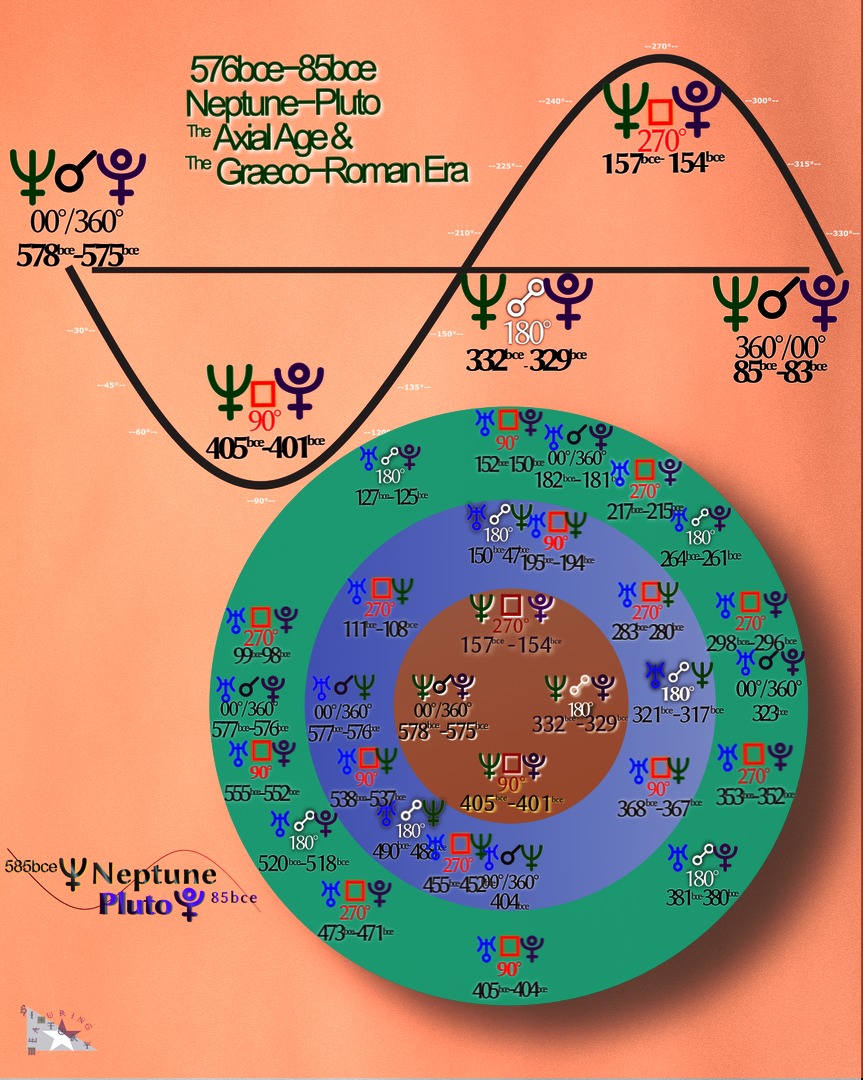
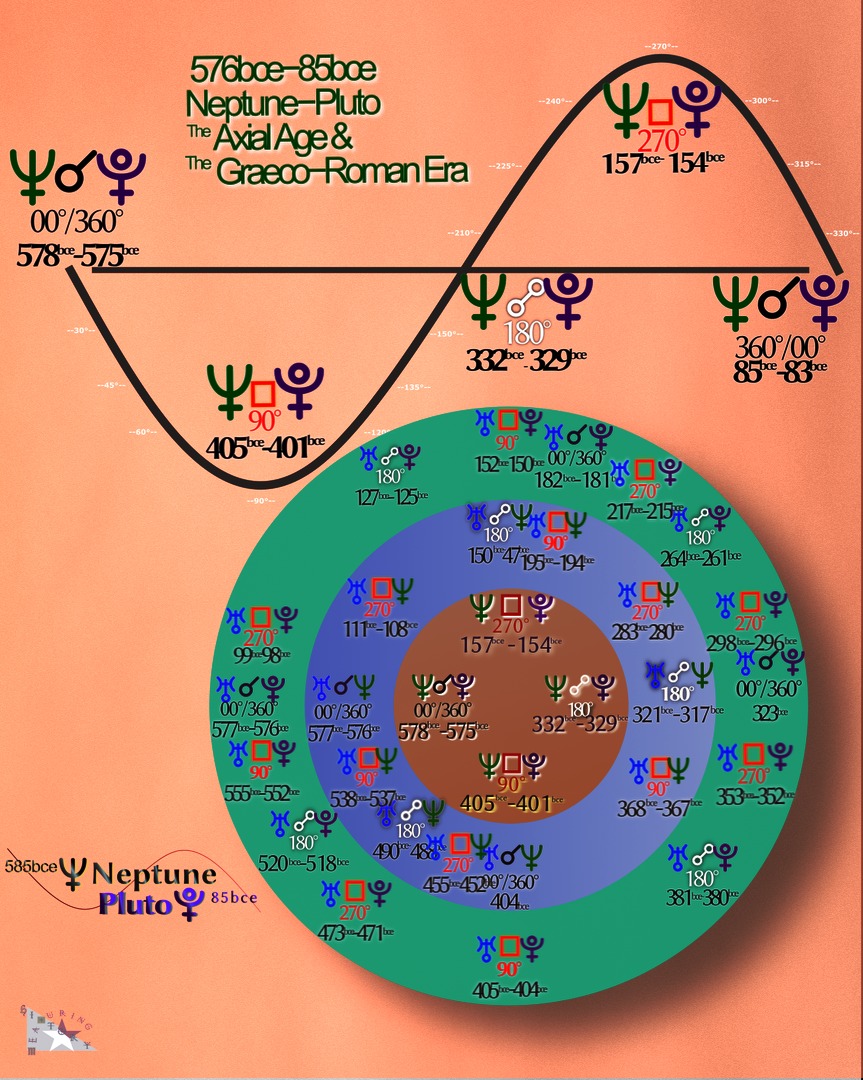
Synodic Outer Planet Synodic cycles and the scales of history work well together. The Neptune-Pluto Trading Cards seen on this page mark the 495-year cycle between the two planets. 500 years seems to provide enough context for history to turn interesting. Mainstream history defines the titles on the cards. Synodic cycle analysis provides holistic context mainstream history lacks. History by millennia, region or topic certainly are valid means to read the past. Outer Planet Synodic Cycles, the heart of Measuring History joins the list.
Last Phase Explains the First
Pluto travels along a skewed path relative to other planets in our solar system. It is narrow on one end, bulges at the opposite end. In the synodic cycle this translate to the following phase sequence (2-3 years):
| 00/360 to 90 | 90 to 180 | 180 to 270 | 270 to 360/00 |
| 172 years | 72 years | 172 years | 72 years |
This puts us in 2026 at 35 years away from the end of the first phase of the 1892-2384 Neptune-Pluto cycle
To put our current place in history in context, the last phase of the previous cycle, 1399-1891 began in the 1810s. This decade puts us in the acceleration phase of the Industrial Revolution. The ideas thereof were in place, but after the 1810s the ideas increasingly turned into factories that darkened the skies of Britian across the 19th Century. During that last phase, humans went from building a few miles of railroad to digging a tunnel through the alps. As the new cycle began in the 1890s, this cycle did not stop. We did make a transition into a new Neptune-Pluto cycle, signified as The Digital Age. General Electric incorporated itself in New York state in 1891. The Industrial Revolution, a complete product of the 1399-1891 cycle, laid the foundation for the Digital Age. But that we are in the Digital Age does not mean that we have resolved the issues the Industrial Revolution introduced. We could argue that these issues are even more acute as we move more into the Digital Age.
Example from the Modern Age Transition
| 1323 to 1396 | 1397-1572 | 1573-1648 | 1649-1816 |
| 72 years | 172 years | 72 years | 172 years |
| 270° to 360/00° | 00°/360° to 90° | 90° to 180° | 270° to 360/00° |
The Modern Age arose out of the need to reform the very corrupt Catholic institution at the end of the 14th Century. The eventual Reformation created the conditions that created the Age of Reason, from which the Industrial Revolution emerged. That the Church of the time was overseen by the Borgia clan shows its level of corruption; Martin Luther made his stand against a pope from the very mercantile-minded Demidici family. The issue turned existential because the Church oversaw just about every aspect of daily life.
Last Phase, First Phase Relationship of Church Reform
During the final phase of the 906-1396 Neptune-Pluto cycle, 1323-1395 issues surrounding the Western Church evolved into existential crises. A faction favored by the French crown moved the Vatican to Avignon. Because of Rome's political clout, nobles across Europe became quit worried. Division eventually led to The Great Western Schism, wherein up to three popes claimed the throne. The Church fell further into public question after Black Death in the 1340s. That so many died in the fifty years before the 1390s Neptune-Pluto conjunction in Europe further undermined sentiment. The plague also decimated the ranks in Europe's monasteries, putting pressure on sources of information. The 1399-1891 Neptune-Pluto cycle began with Jan Huss and Jon Wycliffe bringing Church legitimacy into question.
1399-1572: To a Point of No-Return
Martin Luther pinned his 95 Theses in 1517. The Reformation carried on until the Peace of Westphalia in 1648. It reached a point of no-return by the 1570s at Neptune-Pluto opening square. The St. Bartholomew's Day Massacre in 1572 put an end to any hope of compromise. A bit north, the Eighty Years War between the Spanish Netherlands and its inhabitants began about the same time. In 1564, within tolerance of the square, the Church doubled down its campaign against heresy; they used it introduce the Jesuits. Any chance of compromise over religious sovereignty evaporated completely in the decades surrounding the 1572 square. The effects of 14th Century Church corruption, associated here with the 1323-1396 final phase created the conditions that led a to new momentum that played out under the characteristics of the new cycle, one defined as the Transition to the Modern Age.
 Neptune-Pluto Cycles and the Ages of History